Resiada
Led the 0-to-1 design of Resiada, a B2B hotel-block platform that replaced spreadsheets and legacy tools (Passkey, OnPeak), with consumer-grade attendee booking that pulled the funnel back from Expedia and Airbnb.
Case highlights
0 → 6 figures
First-year revenue
exceeded initial projections in year one
−60%
Booking time
vs prior manual / legacy-platform processes
50+
Events managed
room blocks 10 → 1,000+ rooms each, first year
Event planners coordinate hotel room blocks for their attendees. Before Resiada, that workflow ran on excel spreadsheets at the small / mid tier, or on expensive legacy platforms (Passkey, OnPeak) for large events. Event planners hated both but had no real alternatives. On the B2C side attendees were bailing out of the booking process to make their own bookings, causing the event organizers to lose considerable commission revenue.
I led 0-to-1 design of Resiada end-to-end, from conception through launch and multi-year iteration. One platform, two surfaces: a B2B setup wizard for planners with progressive disclosure so a 20-person meetup and a 1,000+ room conference fit the same product, and a consumer-grade attendee booking experience baselined against Airbnb. SISO 2019 winner; six-figure revenue in year one.
- Spreadsheets were operational chaos for small / mid events. Legacy platforms were ridiculously expensive and shipped outdated, hard-to-use interfaces with minimal customization for the large-event tier.
- Public-facing booking sites were not multilingual, multi-currency, or WCAG accessible. International events couldn’t reach a global audience; attendees with disabilities were excluded.
- Attendees compared event booking sites to Expedia and Airbnb, found them worse, and left the flow. The lost commission revenue became sizable for events with a lot of travellers.
- No customization or sponsor-monetization on existing platforms.
The differentiation gap was consumer-grade UX with deep event customization layered on top. Planners were underserved at the small / mid tier; attendees were being lost to consumer sites.
Launch
Adoption + experience
- 01 Replace spreadsheets at the small / mid event tier.
- 02 Win attendee bookings back from Expedia and Airbnb.
- 03 Cut setup time on complex events.
- 04 Ship full WCAG 2.0 AA / ADA compliance at launch.
Strategy
Category positioning
- 01 Establish a platform alternative to Passkey / OnPeak for the underserved small / mid tier.
- 02 Turn the booking site into an organizer revenue surface via customization and sponsor placements.
- 03 Compete on consumer-grade UX, not on legacy feature count.
- 04 Support 10-room meetups and 1,000+ room conferences in one product.
- Two user groups, non-overlapping priorities. Planners want configurability; attendees want speed and ease of use.
- Variable event scale, two orders of magnitude. Information architecture had to flex from 10-room meetups to 1,000+ room conferences without forking the product.
- Consumer-grade UX expected on the attendee side. Resiada was compared against Airbnb and Expedia.
- Compliance and reach are non-negotiable. Full WCAG 2.0 AA + ADA, multilingual, multi-currency. Public-facing booking surfaces for international events.
- Performance ceiling at launch. We had to support extremely large events
- Mobile-first on the booking side. Attendees book on phones just as often as desktops.
12+ planner interviews (current Streampoint clients and enterprise prospects) split the pain cleanly: B2B setup complexity and B2C booking quality. Both sides had abandoned existing tools. Planners had stopped trusting event-specific platforms; attendees had migrated to Expedia and Airbnb.
Competitive analysis ran on both sides. Passkey, OnPeak, and MeetingMax for the industry tier; Airbnb, Air Canada, Expedia, and Google Travel for consumer benchmarks. The desire was for consumer-grade booking UX with deep event customization layered on top.
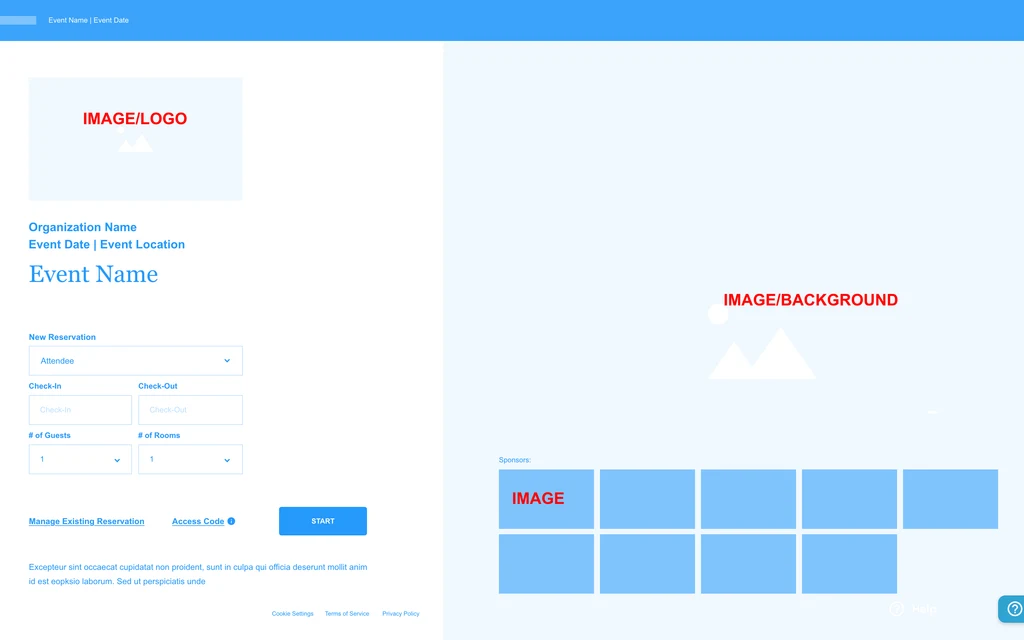
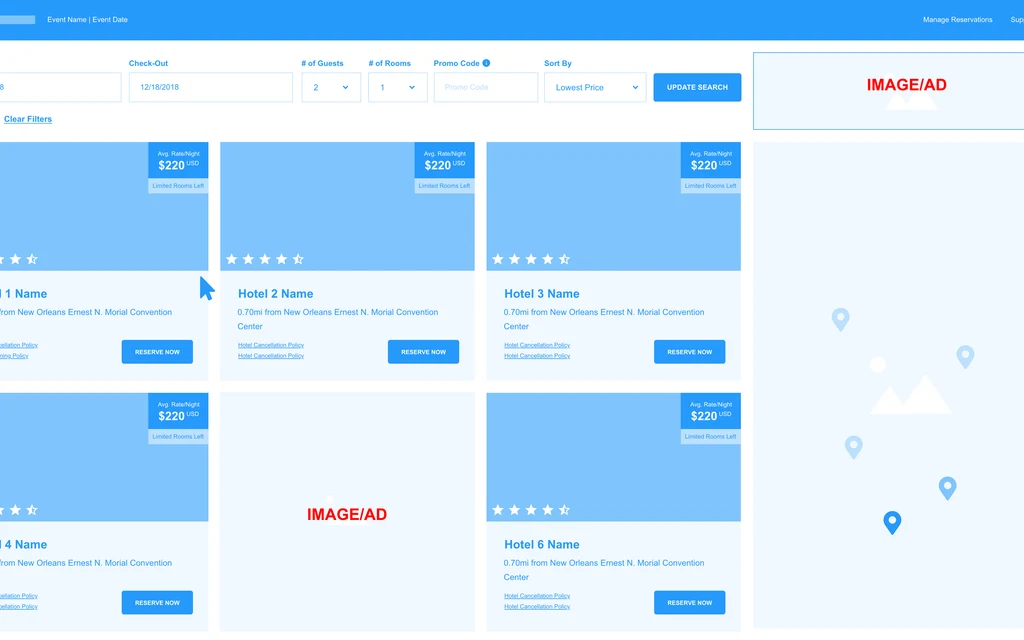
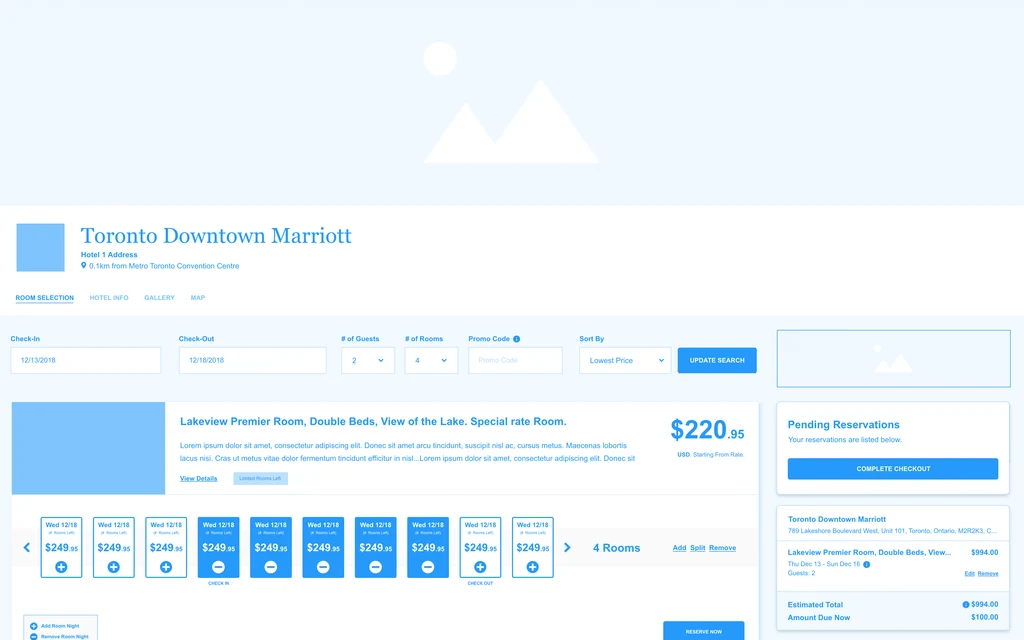
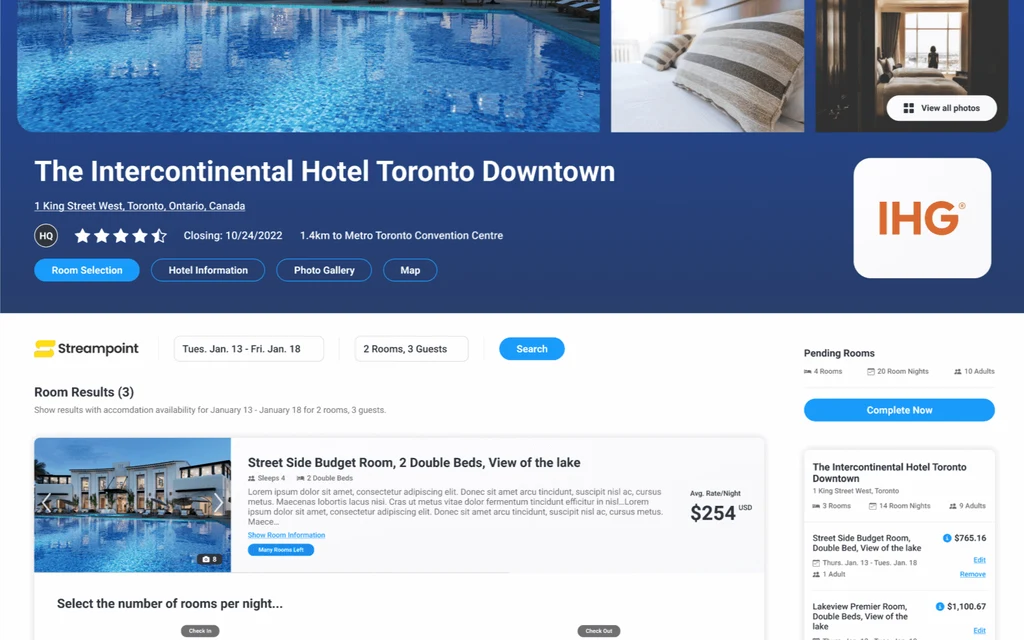
Both approaches went through multiple design rounds. Round 1 was deliberately low-fidelity so stakeholder feedback could land on flow and IA, not on color or visual direction. Round 2 applied the visual system once the flow was locked. The flow stayed identical between rounds; only the visual treatment changed.
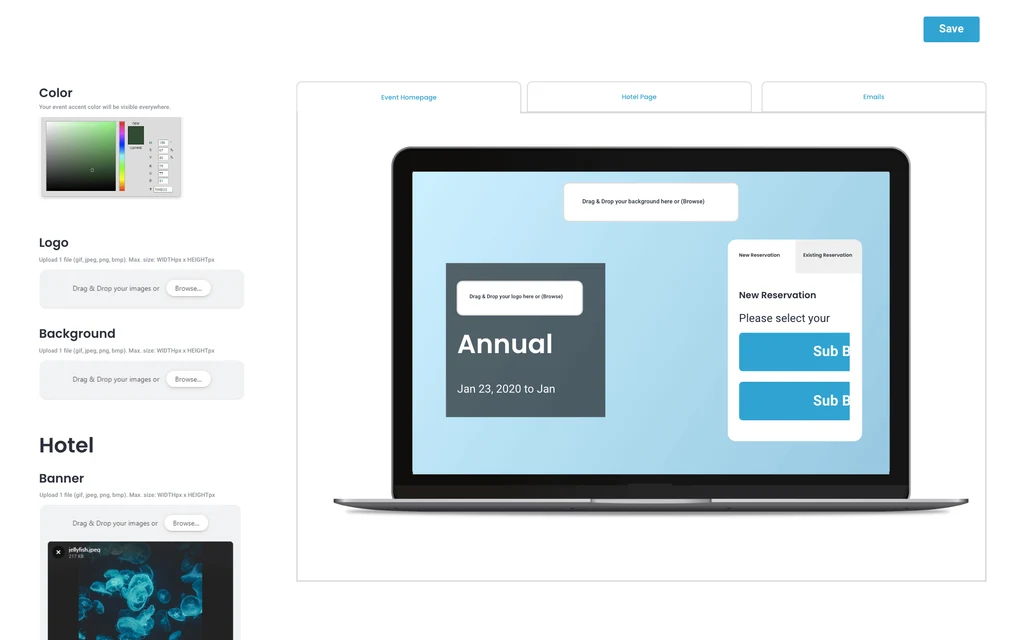
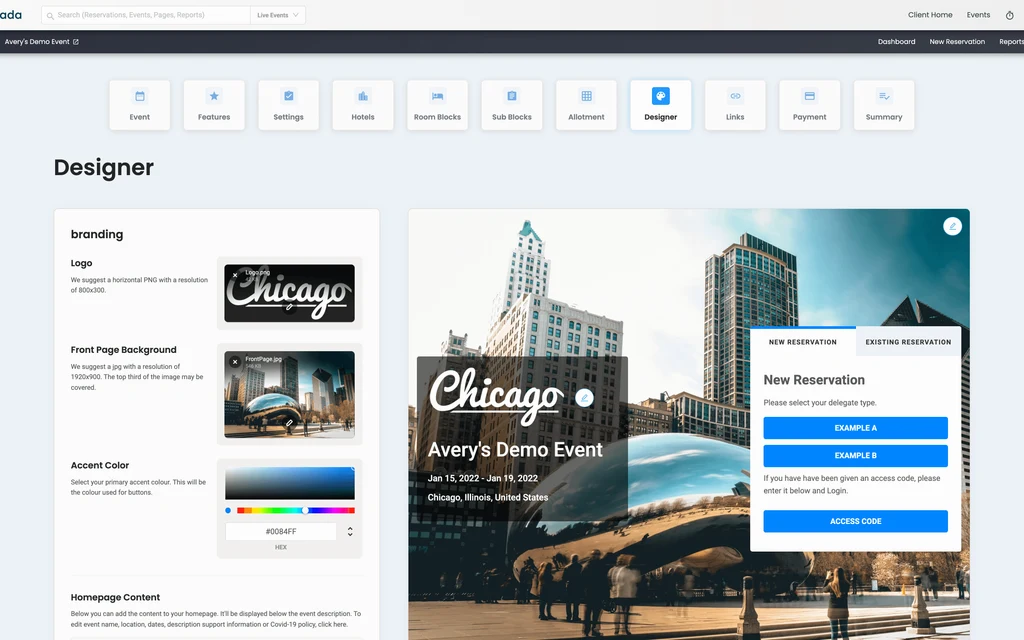
Wizard, step 8 (Designer, where organizers configure customization zones for branding and sponsors):
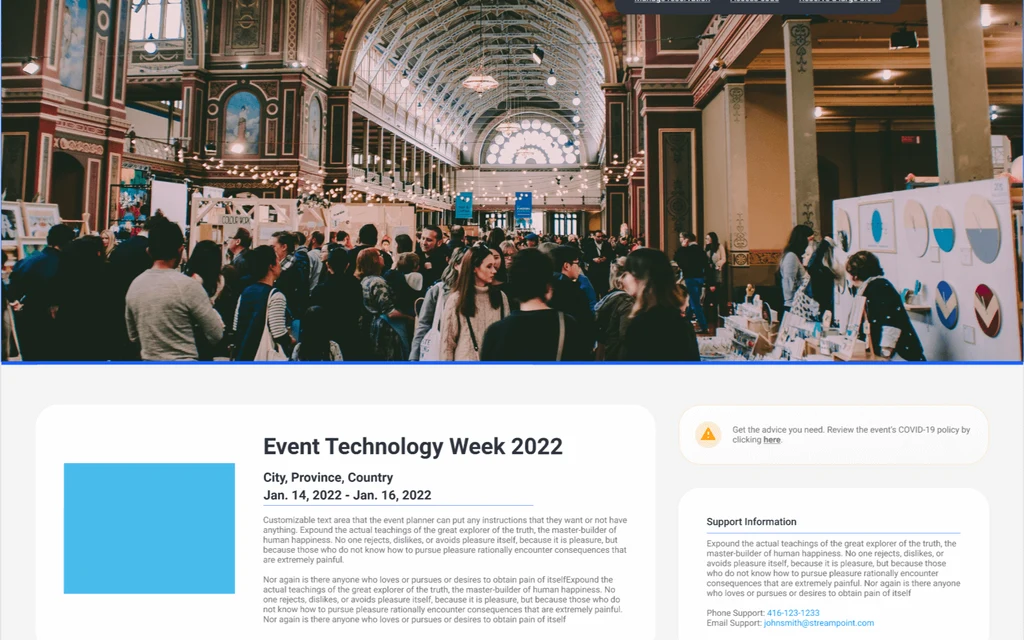
Booking site, attendee splash:
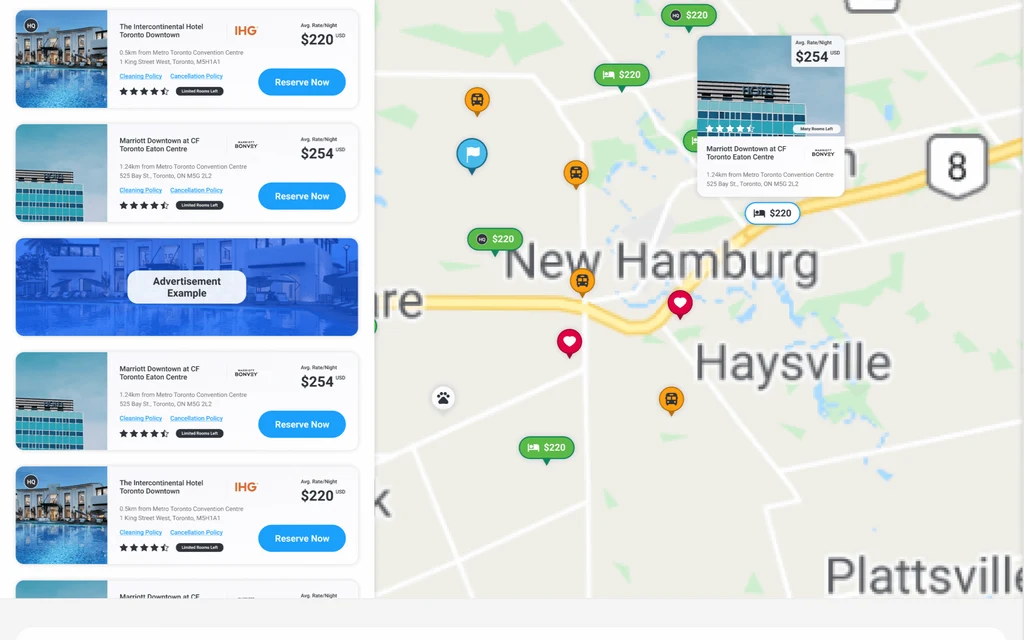
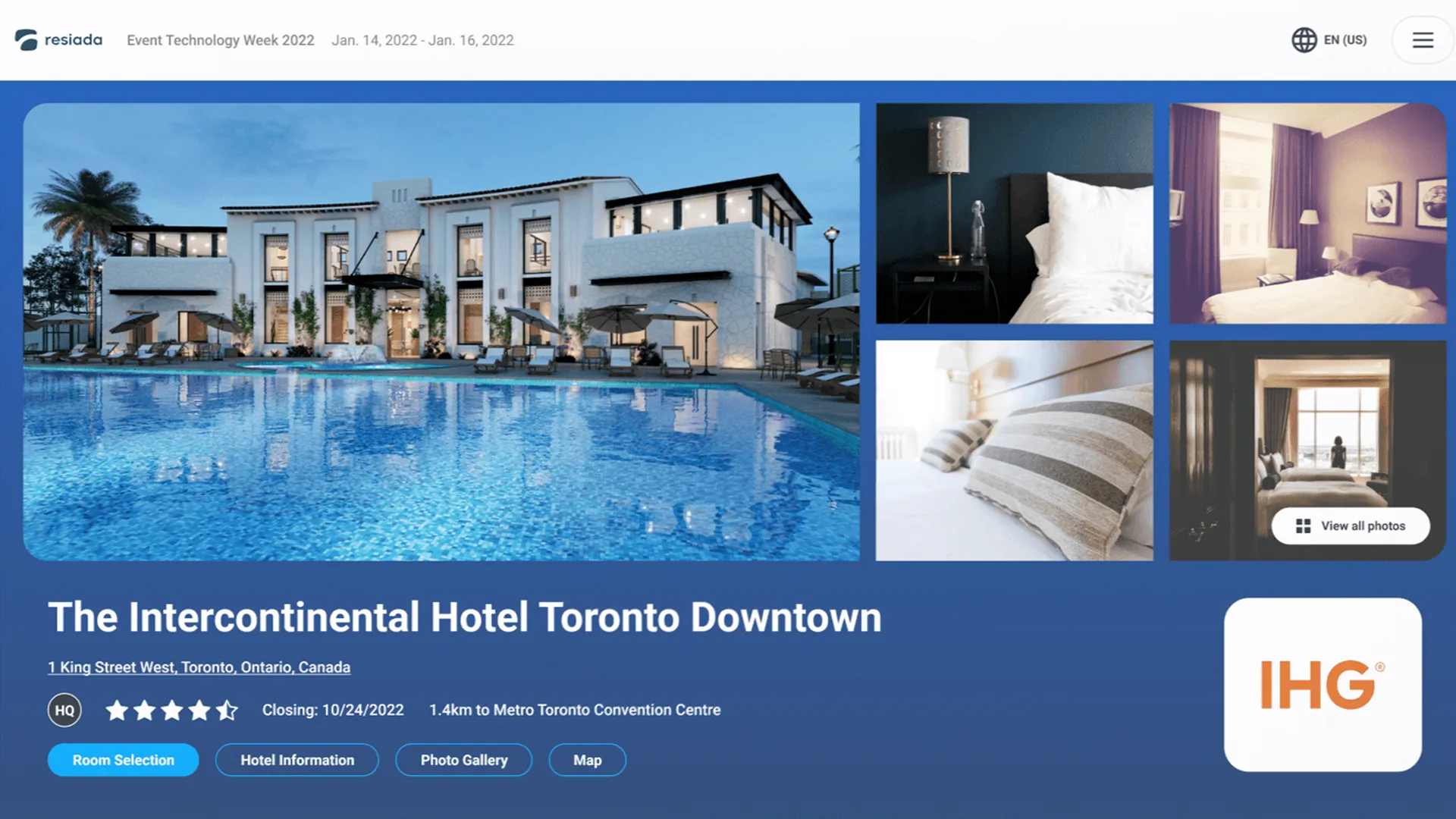
Booking site, hotel selection:
Booking site, room selection:
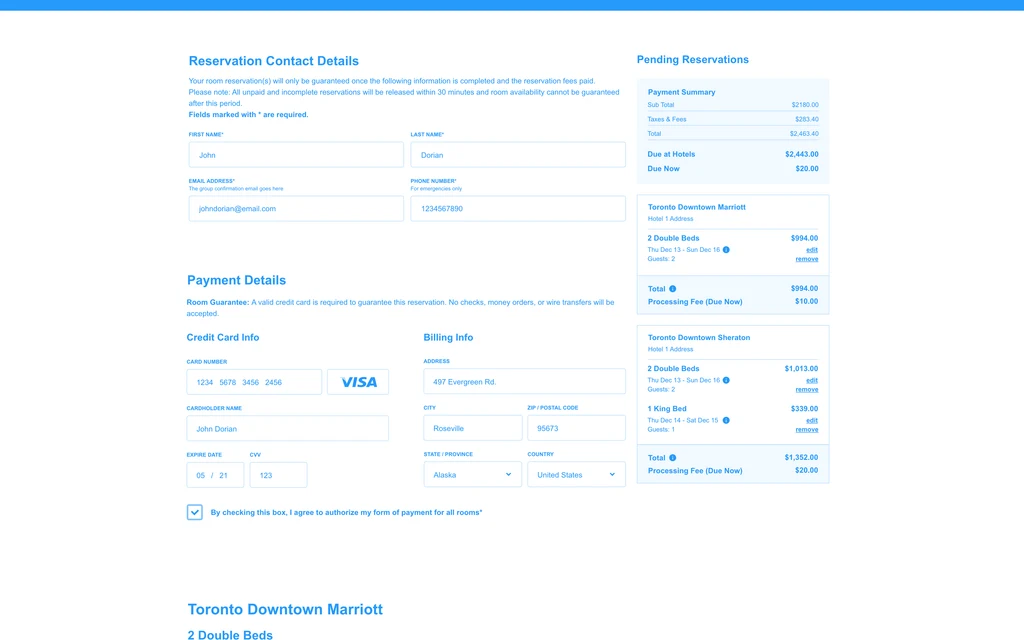
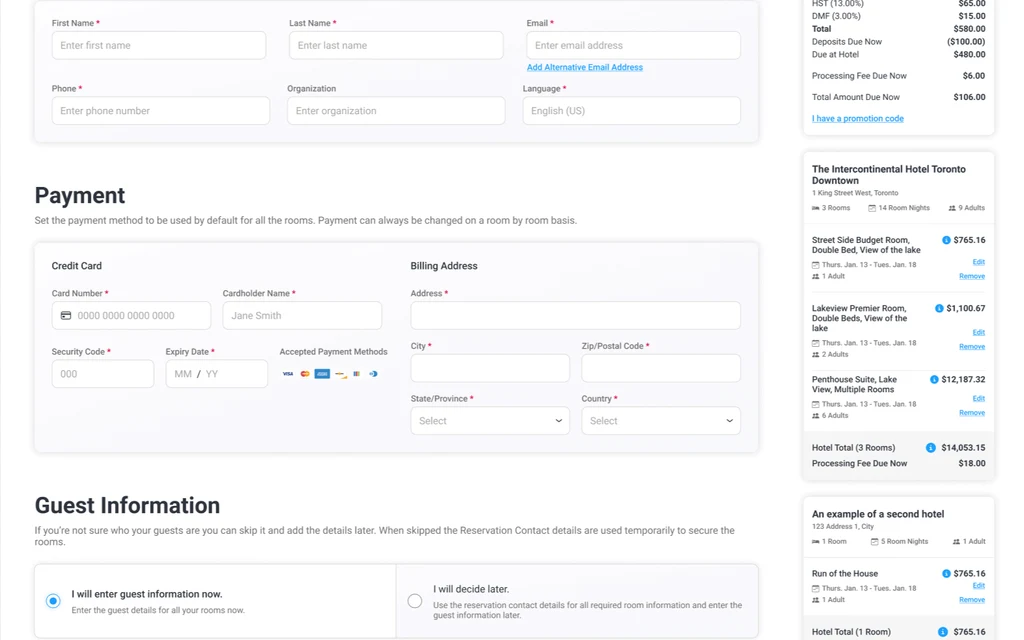
Booking site, checkout:
The booking experience was designed mobile-first. Research showed attendees book on phones more often than desktops, so the mobile flow was the design baseline and desktop / tablet layouts were derived from it.
REEL Final wizard
The wizard in production. Feature selection at step 2 drives which inputs and steps appear downstream. Simple events get a fast minimal flow; complex international conferences still get every advanced control.
REEL Final booking flow
The attendee experience in production. Designed mobile-first with consumer-grade UX, full WCAG 2.0 AA and ADA compliance, and customization zones for organizer branding.
Progressive-disclosure wizard
Single product covering 10-room meetups to 1,000+ room conferences. Each step’s display changes based on the features selected in previous steps, so simple events stay easy, and complex events still get advanced controls.
Mobile-first booking
Research showed attendees book on phones, so designs were mobile-first. Competitors were desktop-only, so it became a differentiator.
Customization + sponsors
Built brand zones and sponsor / ad placements into the booking site. Turned a cost center into an organizer revenue surface.
Grayscale first, visuals second
Round 1 wireframes were intentionally minimal. Forced feedback on UX and IA before stakeholders could critique color while the flow was still wrong. Visual direction landed afterwards.
Designer-built front-end
Contributed ReactJS / SCSS during build. Shortened iteration cycles and preserved interaction nuance (timings, transitions, focus states) that pure-mockup handoff would have lost.
-
0 → 6 figures
First-year revenue
Exceeded initial business projections in year one. Mix of B2B subscription revenue and reclaimed commission from organizer-monetization features.
-
SISO 2019
Industry recognition award
Event Innovation Battlefield winner. Cited by judges for ease of use and feature set against established incumbents.
-
50+
Events managed in year one
Room blocks ranged from 10 rooms (small meetups) to 1,000+ rooms (international conferences). Same product, both ends of the spectrum.
-
−60%
Booking time reduction
vs prior manual workflows and legacy platforms. Validated through client feedback and time-on-task measurement.
-
Sharp drop
Setup support tickets
Setup-related support tickets dropped sharply after the wizard shipped. Onboarding for new event organizers stopped routing through the support team.
-
WCAG 2.0 AA
Compliance + ADA
Led the effort in-team. Competitors weren't compliant. Huge differentiator for enterprise sales.
- Progressive disclosure is the right approach for handling unknown event sizes. The wizard let Resiada serve a 20-person meetup and a 1,000+ room conference from one product. Same lesson applied later at Roofr CRM: when scale variance is the real problem, design the IA to flex.
- Consumer UX is the ceiling for B2B2C surfaces. Attendees compared Resiada to Airbnb, not Passkey. Shipping industry-tier UX on the attendee side would have given the commission revenue back to the consumer sites.
- Mobile-first is essential for hotel bookings. Research showed the booking moment happens on phones. Designing desktop-first would have inverted the priority.
- Accessibility is a category differentiator when the incumbents ignore it. WCAG compliance was a visible competitive signal, not a tax.
- Designer-built front-end preserves interaction nuance. Micro-timings, transitions, and focus states that pure handoff would have lost.
- If repeating: invest more heavily in early internationalization research. Multi-currency handling proved more complex than expected post-launch and required rework.
Post-launch. Resiada iterated through 2022 and continues operating today; the wizard’s progressive-disclosure pattern carried into how I framed adaptive workflow surfaces years later at Roofr.
Deep dive
Curious about the specifics?
Adoption cohorts, revenue pivot data, prototype walkthrough videos, and the internal PRD are available on request during a portfolio review.